Permitted and inspected
Panel Upgrades & Service Changes
A service change or a panel replacement, planned properly: load calculated, permit filed, inspection met, and a directory you can actually read taped inside the door.
- Power off
- Typically 4–8 hours
- Permit
- We file it
- Directory
- Legible, inside the door
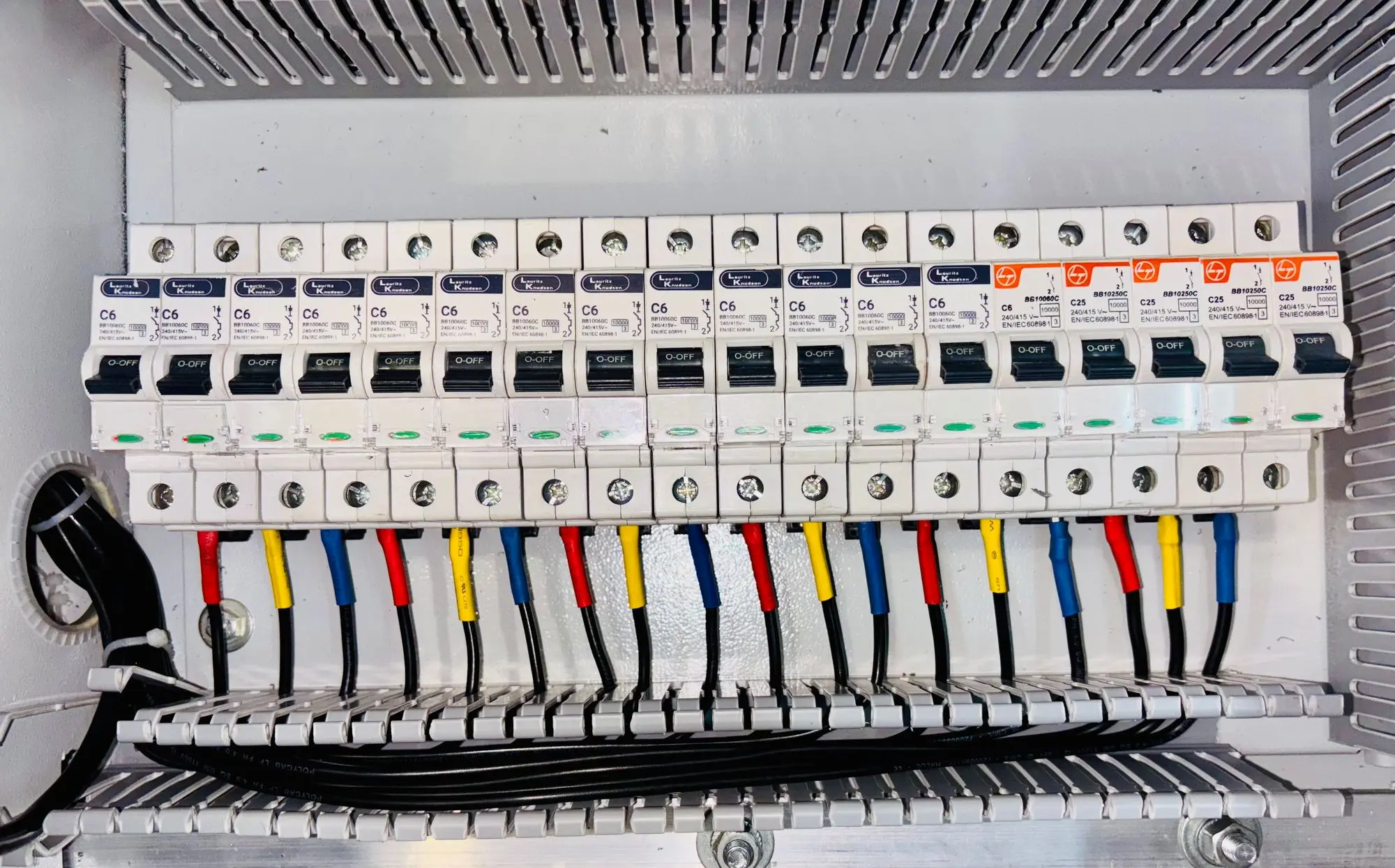
The box everything else in the house depends on.
A panel upgrade is one of the few pieces of work in a house where nothing looks different afterwards. The kitchen is the same, the lights are the same, and several thousand dollars have gone into a grey box in the garage.
What changes is what the house is allowed to do next. Capacity for an EV charger, a heat pump, an induction range, a workshop. Room for the circuits that should have been separate all along. And, on older services, the removal of a genuine risk that has been sitting quietly behind a door for forty years.
- A load calculation on the house as it actually is, not as the old panel assumed
- The permit filed before anything starts, and the inspection met in person
- Coordination with the utility for the disconnect and reconnect, so you know the day
- New service entrance conductors, meter base and grounding where the change requires it
- Every circuit re-landed, identified and tested rather than transferred on faith
- Arc-fault and ground-fault protection where the current code requires it
- A typed circuit directory — every breaker, every room, inside the door
What people actually want to know
It is a bigger job than most, so the questions are always the same four.
How long the power is off
Most residential changes are a single day, with the supply down for the working part of it. You get the window before we book it, not on the morning. If a medical device or a home office makes that impossible, say so early and we will plan around it.
Whether you actually need it
Plenty of panels have twenty good years left and just need a couple of circuits added. We will tell you that. What moves a panel into "replace" territory is capacity, physical condition, a known-defective model, or a service too small for what you are about to add.
What it will cost, before we start
A fixed price after the site visit, including the permit fee, the utility coordination and making good. The variables that could change it — buried conditions, a meter base that fails inspection — are named up front rather than discovered later.
What you are left with
A labelled panel, the permit and inspection record, the load calculation, and photographs of what was behind the old one. That folder is worth real money when the house sells.
How this is priced
- In writing before anything starts
- Readings and findings left with you
- Nobody paid a percentage of the invoice
Priced fixed after a site visit, because a panel quote given over the phone is a guess about a meter base nobody has looked at. The permit fee is in the number. Financing is available through an independent lender for the larger jobs — we do not lend, and nobody here earns more if you use it.
Questions we get
About panel upgrades
How do I know whether 100 amps is still enough?
It depends far less on the size of the house than on what is electric in it. A gas-heated house with a gas range and a gas water heater can be comfortable on 100 amps for decades. Add a heat pump, an induction range and an EV charger and the same house is over. The load calculator on this site walks through the same inputs an electrician uses, and it will tell you when the honest answer is "this needs measuring".
My panel is a brand I have been told is dangerous. Is that true?
Some specific panels made between the 1950s and the 1980s have a documented history of breakers that fail to trip under fault conditions, and several insurers treat them accordingly. Whether yours is one of them is a question with a factual answer, and we will give you that answer plainly rather than selling from it. If it is not one of them, you will hear that too.
Can you do it without a permit to save money?
No. A panel change is inspected work, and an unpermitted one is the sort of thing that surfaces when the house is under contract or when an insurer asks a question after a claim. The permit is a small part of the cost and the entire point of the record.
Stop and call
Burning smell. Scorched outlet. Half the house dark.
The after-hours line rings an electrician who can see the board, not a message service.
- Any smell of burning plastic near an outlet, switch or panel
- Scorch marks, melting or discolouration on a faceplate
- An outlet, switch or breaker that is warm or hot to the touch
- Buzzing, crackling or a sizzling sound from the panel
- A breaker that trips again immediately after being reset
Request this
Tell us what the panel upgrades problem looks like.
Someone calls you back with a real arrival window, usually the same working day.